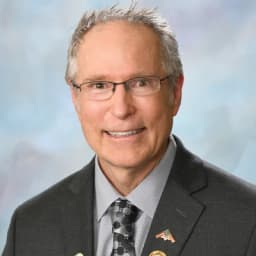
Sen. Greg Blanc on
Government & Elections
33 bills voted on
Votes
Creates a fund to reduce homeowner property taxes.
This bill adds a general statement that 'The Legislature shall promote the future success and development of South Dakota' to state law. It appears to be purely aspirational language with no substantive legal changes, requirements, or mandates.
Changes how mail-in ballots are processed.
This bill modifies South Dakota's absentee ballot processing procedures. Key changes include: allowing the person in charge of elections (rather than just counties) to create absentee ballot precincts; permitting absentee ballot counting boards to begin processing ballots the day before election day and on election day prior to poll closing; allowing automatic tabulation of absentee ballots before polls close (but prohibiting display of vote totals); requiring pollbooks for absentee ballot precincts; and updating various procedural requirements for ballot handling, validation, and counting.
Changes the rules for putting local government decisions to a public vote.
This bill extends the time period for filing referendum petitions against local government ordinances and resolutions from 20 days to 45 days. It applies to county, municipal, and school district ordinances/resolutions. The bill also standardizes the signature requirement at 5% of registered voters and updates publication timing requirements to align with the new 45-day referendum period.
Creates a general framework to address state issues.
This bill adds the statement 'The Legislature shall address issues facing South Dakota' to state law while removing all other substantive content from what appears to have been a previous bill.
Establishes programs to support South Dakota's growth and development.
This bill adds a general aspirational statement that 'The Legislature shall promote the future success and development of South Dakota' to state law. It contains no substantive legal requirements, regulatory changes, or enforcement mechanisms - just a broad policy declaration.
Changes how voter registration lists are made public.
This bill changes how South Dakota publishes voter registration files. Instead of weekly updates, the secretary of state must post the complete statewide voter registration file weekly by 11:59 PM central time each Monday. It also requires maintaining and publishing a rolling five-year historical archive of the complete voter registration file, updated weekly. The bill clarifies that restrictions on commercial use and internet posting of voter data do not apply to these official publications by the secretary of state.
Changes rules for submitting candidate petitions.
This bill modifies filing deadlines and procedures for nominating petitions across multiple election contexts. It changes municipal candidate filing deadlines from 70 days before election to specific dates (second Tuesday of March for June elections, second Tuesday of August for November elections), extends registered mail receipt deadlines to March 31st and August 31st respectively, modifies candidate withdrawal procedures, updates primary election petition filing deadlines from last Tuesday of March to second Tuesday of March, and adjusts school board candidate petition filing requirements.
Updates rules about public access to government records.
This bill makes minor technical updates to South Dakota's open records law, including grammatical changes (replacing 'which' with 'that'), punctuation corrections, reorganizing text structure for clarity, and updating federal statute citations with effective dates. The substantive exemptions from open records disclosure remain unchanged - the bill only improves readability and organization of existing exemptions.
Requires interpreters for people who need them in state agency hearings.
This bill requires state agencies to provide interpreter or translator services for parties who need language assistance in administrative contested case proceedings. The agency conducting the proceeding must procure and pay for these services from their operating budget. Additionally, the prevailing party in such proceedings can recover their own interpreter/translator costs that weren't covered by the agency.
Changes rules about what government records can be made public.
This bill modifies public access to voter registration records by expanding privacy protections for certain officials. It adds new protections for personally identifiable information (home addresses, phone numbers, and personal email addresses) for elected/appointed statewide, legislative, and federal officials, current and retired judges, and law enforcement officers. The bill restructures existing privacy protections that previously only applied to judicial officers' home addresses and extends these protections to both current county records and the statewide historical archive maintained by the Secretary of State. It also includes a provision stating that violations do not create a private right of action.
Changes how casino revenue is distributed.
This bill modifies the distribution formula for gaming revenues from the Gaming Commission fund. It changes the percentage allocation to the state general fund (decreasing from 70% to 20% over time from 2026-2029) and to the City of Deadwood's historic restoration fund (increasing from 10% to 60% over the same period). The percentages for municipalities and school districts in Lawrence County remain unchanged at 10% each.
Gives legislators more control over state agency rule-making.
This bill adds new legislative oversight requirements for agency rulemaking by: (1) creating a new definition of 'major rule' (rules with over $1 million in compliance costs over 5 years), (2) requiring agencies to prepare regulatory impact analyses for all proposed permanent rules that detail whether the rule is a major rule, (3) requiring code counsel to advise agencies whether proposed rules are major rules, and (4) requiring regulatory impact analyses to be provided to legislative committees and published on state websites as part of the rulemaking process.
Addresses various issues facing South Dakota.
This bill creates a non-substantive statement that 'The Legislature shall address issues facing South Dakota.' It appears to be either a placeholder bill or potentially defective legislation with no actual legal effect or requirements.
proposing and submitting to the voters at the next general election, amendments to the Constitution of the State of South Dakota, removing the lieutenant governor as presiding officer of the Senate.
Limits courts from deferring to state agencies' interpretations of laws.
This bill eliminates judicial deference to state agency interpretations of statutes, rules, and policies. Courts and hearing officers must interpret agency rules de novo (from scratch) rather than deferring to the agency's interpretation. When doubt remains after applying all interpretation tools, courts must favor interpretations that protect individual constitutional rights over agency positions.
Requires state agencies to check with aviation officials before buying or selling state aircraft.
This bill requires state agencies to consult with the Aeronautics Commission when purchasing, transferring, or disposing of state-owned and operated aircraft, including unmanned aircraft systems. The commission must provide advice and expertise in the form of a written report to the Governor and the requesting agency.
Extends deadline for Cultural Heritage Center renovation funds.
This bill extends the reversion date for unused appropriated funds from June 30, 2026 to June 30, 2028 for moneys allocated to the Department of Education to improve and renovate the Cultural Heritage Center. The bill is effective beginning June 29, 2026.
Requires proof of citizenship to register to vote.
This bill requires individuals to provide proof of U.S. citizenship when registering to vote using documentation such as driver's licenses issued after July 1, 2025 (that verify citizenship), tribal ID cards, birth certificates, U.S. passports, or certificates of naturalization. Individuals who cannot provide citizenship documentation are designated as 'federal voters' and can only vote in federal elections (president, U.S. senator, U.S. representative). Current registered voters are grandfathered in until July 1, 2026, but must provide citizenship proof if they move to a different county within the state.
Clarifies what happens when governor's appointees resign.
This bill modifies procedures for gubernatorial appointments to boards and commissions that require Senate consent. It clarifies that when positions become vacant due to resignation, the resigning person must continue serving until the earlier of: (1) the Governor appointing another person with Senate consent, (2) the Governor making an interim appointment that the Senate acts upon, or (3) a date set in writing by the resigning person. It also changes language requiring the Senate to act on interim appointments and establishes procedures for expired terms and deemed renominations.
Updates rules for how city governments operate.
This bill revises municipal government procedures including: clarifying the process for filling mayoral vacancies through aldermen appointment; establishing succession rules for mayor pro tempore positions; updating eligibility requirements for municipal officers to require 3-month residency and qualified voter status; revising appointment procedures for municipal officers; updating oath and bonding requirements for appointed officers; and clarifying when vacancies occur and removal procedures for municipal officers.
urging collaboration to reduce hunger and food waste in this state under the protections of the 1996 Bill Emerson Good Samaritan Food Donation Act.
Changes when cities can hold their elections.
This bill makes technical amendments to municipal election procedures by changing terminology from 'annual municipal elections' to 'regular municipal elections' throughout various statutes. It also makes minor procedural changes to election timing requirements, allows boards of trustees to extend terms from 3 to 4 years for even-year elections, and updates language for filling municipal office vacancies including mayors and aldermen.
Requires publishing election results for local party committee positions.
This bill requires county auditors to forward information about precinct committeeman and committeewoman candidates and election results to the secretary of state, who must then post this information on their website. The information includes candidate names upon filing, election results from primary elections, and names of those automatically elected without opposition.
Changes ballot requirements for certain elections.
This bill consolidates ballot requirements for primary elections by eliminating separate ballots for precinct committee positions and judicial candidates, instead requiring all candidates to be placed on the official primary election ballot. It removes requirements for separate 'nonpolitical judiciary ballots' and separate ballots for precinct committeeman/committeewoman positions, streamlining the ballot process under State Board of Elections oversight.
Expands who can use the state's cybersecurity protection services.
This bill expands South Dakota's cybersecurity services initiative by changing the eligible entities from just counties and municipalities to also include nonprofit utilities and utilities operated by political subdivisions. The bill maintains the $7 million appropriation to the Attorney General's office but broadens the scope of who can receive cybersecurity infrastructure and technology protection services.
Changes the reasons someone can challenge another person's right to vote.
This bill amends the grounds for challenging a voter's eligibility to vote. It adds United States citizenship as a third basis for challenging voter eligibility (in addition to the existing grounds of voting/registering in another state and state residency). The bill also makes minor grammatical changes to clarify that applications can 'only challenge' rather than 'challenge only' these specific voter qualifications.
Allows using confirmation letters to verify voter registration.
This bill modifies voter registration confirmation procedures by allowing county auditors to use either confirmation letters or postcards (instead of just postcards) to verify voter registration information. It updates the procedures for when acknowledgement notices or address verification requests are returned as undeliverable, restructures the instructions provided to voters, and changes language from 'shall' to 'must' throughout. The bill becomes effective December 1, 2026.
Updates the state's official law books.
This bill updates the official South Dakota Code of Laws by adding new volume revisions (2025 revision of volumes 20, 30, and 31, plus a new volume 20A), renumbering subsequent volumes, and updating the effective dates from 2025 to 2026 for when the updated code takes effect. It is purely a technical housekeeping measure to incorporate newly revised volumes of statutes into the official code.
Bans state employees from working for companies they gave contracts to.
This bill creates new restrictions on state employees and officers who handle government contracts. It prohibits them from being employed by organizations that received contracts they approved, awarded, or administered - for one year if the contract was under $1 million, or two years if over $1 million. It also updates existing conflict of interest rules with clearer language and procedures for exceptions.
urging the people of the state of South Dakota to seek the Lord Most High for His healing presence and mercy upon South Dakota.
honoring the life and achievements of the late Charlie Kirk.
Updates rules for running city and school elections.
This bill makes technical amendments to municipal and school district election procedures. It clarifies terminology (adding definitions for 'in conjunction with' and 'combined with'), changes voter qualification language from 'person' to 'individual', modifies residency requirements and challenge procedures for different types of combined elections, adjusts publication timing requirements for election notices, and establishes specific absentee ballot availability timelines including a 46-day requirement when municipal elections are combined with county elections using the same ballot.
Bans political candidates from accepting money from foreign nationals.
This bill amends campaign finance law to prohibit candidates and political committees from accepting contributions or loans from foreign nationals (as defined in federal law). It increases penalties from a Class 2 misdemeanor to a Class 1 misdemeanor for first violations, and from Class 1 misdemeanor to Class 6 felony for subsequent offenses within a calendar year. The bill includes an emergency clause for immediate implementation.