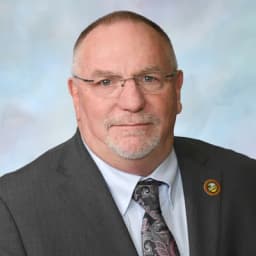
Sen. Randy Deibert on
Healthcare & Medicaid
14 bills voted on
Votes
Creates a task force to study Medicaid options for tribal communities.
This bill creates the Indian Medicaid Managed Care Model taskforce to study the creation of Indian medicaid managed care entities in South Dakota. The taskforce includes representatives from federally recognized tribes, state department secretaries, legislators, Bureau of Indian Affairs representative, and members representing healthcare providers, healthcare insurance providers, and healthcare administrators. The taskforce must report findings and recommendations to the Governor by December 1, 2028, and is effective January 1, 2027.
Joins an interstate agreement for respiratory therapist licenses.
This bill adopts the Respiratory Care Interstate Compact, allowing respiratory therapists licensed in one member state to practice in other member states through a streamlined process. It establishes criminal background check requirements for new licensees and creates a multi-state regulatory framework with data sharing, complaint investigation mechanisms, and adverse action reporting requirements.
Joins an interstate agreement for athletic trainer licenses.
This bill adopts the Athletic Trainer Licensure Compact, allowing licensed athletic trainers to practice across state lines in member states without obtaining additional licenses. The bill creates a new chapter establishing the compact framework, defines terms related to interstate athletic training practice, sets requirements for background checks, and establishes procedures for mutual recognition of licenses among participating states.
Requires home care agencies to get licensed.
Creates a new licensing requirement for non-medical home care agencies starting January 1, 2027. Requires agencies to obtain annual licenses from the Department of Health, ensure home care aides complete 10 hours of training (including dementia care and safety procedures), conduct criminal background checks on owners and aides, and maintain client records. Establishes penalties including Class 1 misdemeanor for operating without a license. Gives the Department authority to inspect, investigate complaints, and revoke licenses for violations.
Creates a committee to improve services for people with developmental disabilities.
This bill creates a new nine-member Developmental Disability Services Oversight Committee to examine and monitor Medicaid waiver programs that provide home and community-based services to individuals with intellectual and developmental disabilities. The committee will monitor program implementation, hear testimony from the Department of Human Services, seek feedback from stakeholders, and provide annual reports with recommendations to the Legislative Research Council.
Requires health insurance companies to streamline their approval process for medical treatments.
This bill makes extensive formatting and organizational changes to South Dakota's health insurance utilization review statute (58-17H-1), converting many list items from paragraph format to numbered subsections and making minor grammatical corrections. The changes are primarily cosmetic reorganization - converting existing definitions like 'authorized representative,' 'facility,' 'health carrier,' and 'managed care plan' from narrative format to lettered/numbered lists without changing the substantive meaning or requirements.
Asks federal government to ban buying soda with food stamps.
This bill requires the Department of Social Services to submit a federal waiver request to exclude soft drinks (nonalcoholic beverages with natural or artificial sweeteners) from being purchased with SNAP benefits. The department must submit the request by September 1, 2026, implement the restriction within 6 months if approved, and resubmit annually until approved if initially denied. Milk, milk products, milk substitutes, and WIC-approved juices are excluded from the soft drink definition.
Lets diabetic students carry and use their medications at school.
This bill expands the existing law allowing students to possess and self-administer prescription medication on school property to include nasal glucagon (for diabetes emergencies) in addition to the current allowances for inhaled bronchodilators (asthma) and auto-injectable epinephrine (anaphylaxis). The bill updates definitions to include diabetes as a qualifying condition and nasal glucagon as an approved medication, while maintaining the same authorization requirements from parents and healthcare providers. It also includes liability protection language stating that schools and their employees are released from liability for injuries arising from student self-administration unless there is 'wanton or willful misconduct.'
Joins an interstate agreement for physician assistant licenses.
This bill adopts the Physician Assistant Licensure Compact, allowing physician assistants (PAs) licensed in one participating state to practice in other participating states through a 'compact privilege' without obtaining separate licenses. The compact creates a national commission to oversee the system, establishes uniform standards for PA licensure including criminal background checks, requires participation in a shared data system for tracking adverse actions, and sets specific requirements PAs must meet to exercise practice privileges across state lines.
Stops surprise ambulance bills and sets payment rules for out-of-network emergency services.
This bill prohibits ambulance service providers from balance billing patients for out-of-network emergency medical services (patients can only be charged their copay, coinsurance, or deductible). It requires health benefit plans to reimburse out-of-network ambulance providers at rates set by local political subdivisions, or if no local rate exists, at the lesser of the provider's billed charge or 325% of Medicare rates. The Division of Insurance must compile and post ambulance reimbursement rates from political subdivisions on their website. Both ambulance providers and health plans must provide clear explanations of benefits to patients. The Division of Insurance can investigate violations and impose penalties. Self-funded employer plans, Medicaid, Medicare, and other federal programs are exempt.
Stops insurance companies from denying coverage to organ donors.
This bill prohibits insurers from declining, limiting, or discriminating against individuals in life, disability, or long-term care insurance policies based solely on their status as living organ donors. It specifically prevents insurers from conditioning policy continuation on an individual not becoming a living organ donor and prohibits discrimination in coverage terms, pricing, or conditions based solely on living organ donor status without additional actuarial risk.
Pays back doctors who participated in rural recruitment programs.
This bill appropriates $978,294 to reimburse 4 family physicians, 2 physician assistants, and 6 nurse practitioners who have met rural recruitment assistance program requirements under section 34-12G-3, and appropriates an additional $370,000 to reimburse other eligible health care professionals who have met requirements under section 34-12G-12. The bill includes standard appropriation procedures and declares an emergency for immediate effect.
Funds a program to improve rural healthcare.
This bill appropriates $500,000,000 in federal fund expenditure authority to the Department of Health to implement a rural health transformation program authorized by the One Big Beautiful Bill Act (Pub. L. No. 119-21). The appropriation expires June 30, 2031, and the bill includes an emergency clause.