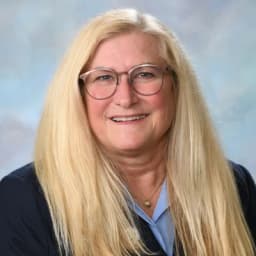
Rep. Keri Weems on
Courts & Criminal Justice
21 bills voted on
Votes
Updates how legal documents are delivered to county commissioners.
This bill modifies service of process procedures for counties and boards of county commissioners. It changes who can be served with legal papers on behalf of counties (expanding from just county commissioners to include county administrators, auditors, executives, or registered agents) and clarifies that service on any of these individuals constitutes service on both the county and the board of county commissioners. It also updates the appeal process for county board decisions by changing how written notice must be served.
Adds daycare centers to school safety zones with stricter penalties for crimes.
This bill expands the definition of 'community safety zone' to include licensed day care centers, licensed group family day care homes, and registered family day care facilities. The existing definition already included schools, public parks, playgrounds, pools, domestic abuse shelters, and sexual assault shelters. Community safety zones are areas within 500 feet of these facilities where registered sex offenders are prohibited from residing, with certain exceptions. The bill reorganizes the definition into a clearer list format while adding the three new child care facility types.
Allows courts to send juveniles convicted of weapons crimes to adult prison.
This bill expands the circumstances under which juvenile courts can commit delinquent children to the Department of Corrections by adding weapons offenses (under sections 22-14-5, 22-14-7, 22-14-20, 23-7-44, or subdivision 22-30A-17(2)) to the list of qualifying offenses. The bill also makes various technical language changes throughout the juvenile disposition statute, changing 'shall' to 'must' and making other minor wording adjustments.
Gives investigators power to demand business records in certain cases.
This bill creates new investigative subpoena authority for the attorney general in criminal investigations involving internet crimes against children or human trafficking. It allows the attorney general to obtain judicial approval to issue subpoenas compelling electronic service providers, internet service providers, and telecommunications carriers to produce business records including subscriber information, account details, IP addresses, and device identifiers. The bill requires judicial approval based on 'reasonable cause' standard and includes non-disclosure provisions preventing providers from notifying account holders. It also provides legal immunity for providers who comply with these subpoenas.
Funds a study of juvenile detention and residential facilities.
This bill directs the Department of Corrections to conduct a comprehensive study of juvenile correctional and residential facilities, evaluating best practices in juvenile detention and treatment, therapeutic housing models, vocational training and mental health integration, and staff-to-youth ratios and safety protocols. The study must include on-site inspections at three out-of-state facilities. The bill appropriates $50,000 for this purpose and requires a report by September 1, 2026.
Bans creating and sharing deepfake images or videos of real people.
This bill expands South Dakota's criminal invasion of privacy law to criminalize the creation and distribution of deepfake pornography and non-consensual intimate images. It adds specific intent requirements (to harm, embarrass, harass, etc.) and creates new criminal penalties: Class 1 misdemeanor for basic violations, Class 6 felony for repeat offenses or when victims are minors, and Class 5 felony for creating/distributing digitally fabricated sexual material (deepfakes). The bill defines 'digitally fabricated material' as images that appear authentic but are modified to falsely depict someone's appearance or conduct.
Increases penalties for drug crimes in state prisons.
This bill enhances criminal penalties for controlled substance violations in state correctional facilities by: 1) Increasing penalties for inmate possession of controlled substances from Class 4 to Class 3 felony, 2) Increasing penalties for delivering controlled substances to inmates from Class 4 to Class 3 felony, 3) Creating new Class 5 felony penalties for controlled substance ingestion by inmates in correctional facilities and by persons under parole supervision.
Funds programs that help prisoners and prison staff.
This bill appropriates $2.7 million from the general fund to the Department of Corrections to provide a grant to a nonprofit corporation that delivers trauma-informed programming, leadership development, and skills training to both offenders and correctional staff at state correctional facilities. The nonprofit must have delivered programming at a state facility within six months before the effective date and must serve the South Dakota State Penitentiary, Mike Durfee State Prison, and South Dakota Women's Prison.
Increases penalties for interfering with religious practices.
This bill increases the penalty for preventing someone from practicing their religion through threats or violence from a Class 1 misdemeanor to a Class 6 felony. The bill also makes a minor grammatical change from 'threats' (plural) to 'threat' (singular).
Provides emergency funding for a therapy center for students in Brown County.
This bill appropriates $2,000,000 from the general fund to the Department of Corrections to construct, complete, and equip a regional juvenile corrections center in Brown County. The appropriation includes funding for heating, plumbing, water, sewer, electric facilities, architectural and engineering services, and other required services. The Bureau of Human Resources and Administration will supervise the project, and the bill includes standard provisions for voucher approval and fund reversion procedures.
Exempts human trafficking and domestic abuse victims from certain clemency notification requirements.
This bill creates an exemption from clemency notice requirements in section 24-14-4 for victims of human trafficking or domestic abuse. To qualify for the exemption, applicants must submit an affidavit stating they are victims of human trafficking under chapter 22-49, domestic abuse as defined in section 25-10-1, or similar crimes from other states, plus affidavits from two qualified professionals (law enforcement, prosecutors, parole agents, mental health professionals, healthcare providers, addiction counselors, or social workers/advocates) confirming the victim status.
Changes the definition of aggravated assault.
This bill makes minor technical revisions to South Dakota's aggravated assault statute, changing the language structure from 'Any person who...' to 'No person may...' and updating verb forms for consistency (changing 'Attempts' to 'Attempt', 'causes' to 'cause', etc.). The bill also adds 'physical object simulating a deadly weapon' to the existing provision about physical menace with deadly weapons. The substantive elements and requirements for aggravated assault charges remain unchanged.
Allows courts to order treatment at certain nonprofits as part of probation or parole.
This bill expands probation and parole conditions to allow courts to require defendants to participate in treatment programs at nonprofit entities that receive alternative care program grants. It adds this as an option alongside existing conditions like fines, community service, drug courts, and chemical dependency treatment. The bill also updates DUI penalty sections to reference these alternative care programs as options for suspended sentences in repeat DUI cases.
Funds demolition of the Pierre Minimum Center prison facility.
This bill authorizes the Department of Corrections to demolish the Pierre Minimum Center, appropriates $682,825 from the general fund for the demolition project, places the project under supervision of the Bureau of Human Resources and Administration, and includes standard appropriation procedures for voucher approval and fund reversion.
Seals court records when protection order requests are dismissed or denied.
This bill allows courts to immediately seal court files containing dismissed protection order petitions. It applies to both domestic violence protection orders (chapter 22-19A) and harassment protection orders (chapter 25-10). When a court dismisses a protection order petition either initially or after a hearing, the court may then grant immediate sealing of the court file containing that petition.
Updates theft laws for contractors and suppliers.
This bill completely rewrites the theft statute for contractors, subcontractors, and suppliers working on real estate improvements. The current law makes it theft when someone 'knowingly uses more than five hundred dollars' of payment proceeds for purposes other than paying for labor, skills, materials, and machinery while accounts remain unpaid. The new law removes the 'knowingly' requirement and dollar threshold, making it theft when someone 'having received or been entrusted with the property of another for the purpose of improvement of real estate, and with the intent to defraud, appropriates that property' for any purpose other than the real estate improvement it was received for.
Changes the fee for preparing wage garnishment paperwork.
This bill increases the reimbursement fee that garnishees must be paid for preparing garnishment disclosures from $15 to $50. The fee is taxed as part of the plaintiff's costs, and if not paid, the garnishment proceeding is void. The bill also makes minor language changes replacing 'shall' with 'must' throughout the statute.
Makes it a crime to trespass at churches and other places of worship.
Creates a new Class 5 felony crime for trespassing on places of worship or within 1,000 feet of such places with intent to disrupt worship services, menace/harass congregants or employees, or for political intimidation. Defines 'place of worship' as structures where people regularly assemble for religious worship, ceremonies, rituals, and education that a reasonable person would recognize as such by design, signs, or features.
Changes where certain offenders can live near schools and parks.
This bill changes the grandfather date for sex offender residence restrictions in community safety zones from July 1, 2024 back to July 1, 2006. Sex offenders who established residence before July 1, 2006 would be exempt from community safety zone restrictions, while those who established residence between 2006-2024 would lose their exemption. The bill is declared an emergency measure.
Creates a pilot program for releasing defendants before trial.
This bill creates a pilot program in the Unified Judicial System allowing magistrate and circuit court judges to place defendants charged with misdemeanors or felonies under the supervision of presentence court services officers as a pretrial release option. Judges may impose conditions of release under existing statute 23A-43-3. The program requires a report to the Legislature by December 31, 2027, including data on screenings, case supervision numbers, appearance rates, new criminal charges, failure to appear rates, bond revocations, and program costs. The pilot program expires December 31, 2027.
Changes fees for court record copies.
This bill modifies court clerk fees by increasing the fee for reproducing authenticated, exemplified, or double certificates of court records from $2 to $15, removes the $2 certification fee for documents, and makes minor grammatical corrections to the statute. The bill does not change any liability standards, legal procedures, or substantive law - only administrative fees charged by court clerks.