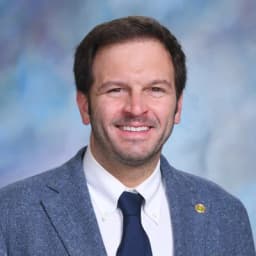
Sen. Brandon Wipf on
Agriculture & Land
15 bills voted on
Votes
Changes who qualifies as an agricultural equipment dealer.
This bill expands the definition of 'agricultural equipment dealer' by removing an exclusion that previously exempted dealers whose principal business is selling off-road construction equipment. Now these dealers will be included in the agricultural equipment dealer regulatory framework if their sales of a manufacturer's equipment equal or exceed 30% of their gross agricultural equipment sales.
Makes farm soil products exempt from sales tax.
This bill creates a new sales tax exemption for soil amendments (as defined in section 38-19A-1) when 500 pounds or more are sold in a single transaction for exclusive agricultural use.
Changes term lengths for county extension board members.
This bill revises county extension board structure and terms. It allows county commissioners to appoint 5-7 members (instead of requiring a specific number), requires at least two farmers and one county commissioner as members, adds anti-discrimination language including race and sex, and changes member terms from one year to staggered terms of one-to-three years with expiration dates remaining January 10th.
Eliminates a task force on farmland taxes and shifts its duties to the Revenue Department.
This bill eliminates the Agricultural Land Assessment Implementation and Oversight Advisory Task Force and transfers its oversight functions to the Department of Revenue. The Department of Revenue will now directly receive recommendations on agricultural land valuation factors, promulgate rules for agricultural land assessment without task force input, and provide annual reports to legislative committees on agricultural land valuation data by March 1st each year.
Allows people to collect certain bird eggs.
This bill creates a new avian special purpose salvage permit that allows individuals to salvage eggs from non-migratory game bird nests that have been unintentionally destroyed during normal agricultural operations or other lawful activities. The permit authorizes holders to salvage eggs, incubate and hatch them, and band and release the birds. The Game, Fish and Parks Commission will set rules for release criteria, documentation requirements, and establish an annual fee not exceeding $10. The bill also exempts permit holders from existing prohibitions on taking or possessing bird nests or eggs.
Temporarily bans lab-grown meat products from being made or sold.
This bill creates a 10-year prohibition (July 1, 2026 to June 30, 2036) on selling, holding for sale, offering for sale, or distributing any product containing cell-cultured protein in South Dakota. Cell-cultured protein is defined as food products made wholly or in part from cell culture or DNA of a host animal, grown outside a live animal. Violations are Class 2 misdemeanors. The Department of Health can inspect food establishments, issue stop-sale orders, and suspend/revoke licenses for violations. The bill also adds the definition of cell-cultured protein to existing livestock/meat inspection statutes.
Changes requirements for agricultural processors to claim liens.
This bill modernizes the agricultural processor's lien system by requiring electronic filing with the secretary of state instead of paper filing with county register of deeds, expands coverage from ownership to include leasing of farm machinery, clarifies the types of agricultural processing covered, establishes specific information requirements for financing statements, creates notification requirements when agricultural products are sold before lien perfection, and sets enforcement procedures treating these as agricultural liens under chapter 57A-9.
Raises the cap on livestock inspection fees.
This bill increases the maximum allowable livestock ownership inspection fee from $1.00 to $1.65 per head of livestock. It also increases the maximum inspection fee for livestock located outside the ownership inspection area from $1.00 to $1.65 per head. The bill includes an emergency clause for immediate implementation.
Updates pesticide regulations.
This bill removes the requirement that pesticide violations be committed 'knowingly or willfully' from four sections of South Dakota pesticide law. It eliminates the intent requirement for violations involving: distribution/sale of adulterated or misbranded pesticides, distribution/sale of unregistered pesticides, distribution/sale of pesticides with claims differing from registration, and distribution/sale of improperly labeled pesticides. The bill also adds 'preponderance of evidence' as the standard for the secretary to cancel pesticide registrations and makes minor grammatical changes.
Automatically refunds certain fees charged on crops, livestock, and milk.
This bill creates an automatic refund process for agricultural assessments on crops, livestock, and milk. It allows growers and sellers to file a single electronic request before December 31st for automatic refunds of all assessments paid during the following calendar year, rather than applying for refunds within 60-90 days after each individual assessment. The bill also requires commissions and councils to provide online applications and electronic submission of documentation.
Allows farmers to sell meat directly to customers while waiting for federal approval.
This bill creates a framework allowing meat producers to sell uninspected meat and meat food products directly to consumers from cattle, sheep, swine, or goats they raised and slaughtered on their premises or at custom exempt plants. The meat must be produced in-state, sold directly to end consumers in-state, and labeled as uninspected and not for resale. The provision only becomes effective when federal law allows such sales or federal courts declare the federal prohibition unconstitutional.
Bans lab-grown meat as unsafe food.
This bill amends South Dakota's food adulteration law to classify all cultivated-protein food products (lab-grown meat made from animal cells grown in vitro) as adulterated food, effectively banning their manufacture, sale, distribution, and transportation in the state.
Funds demolition of old buildings at the State Fairgrounds.
This bill authorizes the Department of Agriculture and Natural Resources to dismantle and demolish specific buildings at the South Dakota State Fairgrounds in Huron (barns on the corner of Livestock Avenue and Market Street, and Quonset huts on Lincoln Avenue South). It appropriates $337,000 for this demolition work, allows the department to accept additional funding from federal sources or donations, places administration under the Bureau of Administration, and declares an emergency to make the act effective immediately.
Changes the yearly fees for large livestock farms.
This bill increases the annual fees imposed on concentrated animal feeding operations (CAFOs) that require water pollution control permits. The fees are increased by approximately 150% across all livestock categories - for example, dairy cow fees increase from $0.172 to $0.43 per animal, cattle/bison fees increase from $0.12 to $0.30 per animal, and similar proportional increases apply to swine, horses, sheep, poultry, and other livestock.
Updates rules limiting foreign ownership of farmland.
This bill strengthens enforcement of foreign ownership restrictions on agricultural land by: (1) adding civil penalties for minority owners who violate ownership restrictions (penalty equals fair market value of their interest share), (2) creating forfeiture procedures where violating minority owners' interests are first offered to other equitable owners at fair market value, (3) establishing civil penalties up to 10% of fair market value for failing to file required federal disclosure reports, and (4) giving the attorney general authority to collect penalties through court action in multiple venues.